
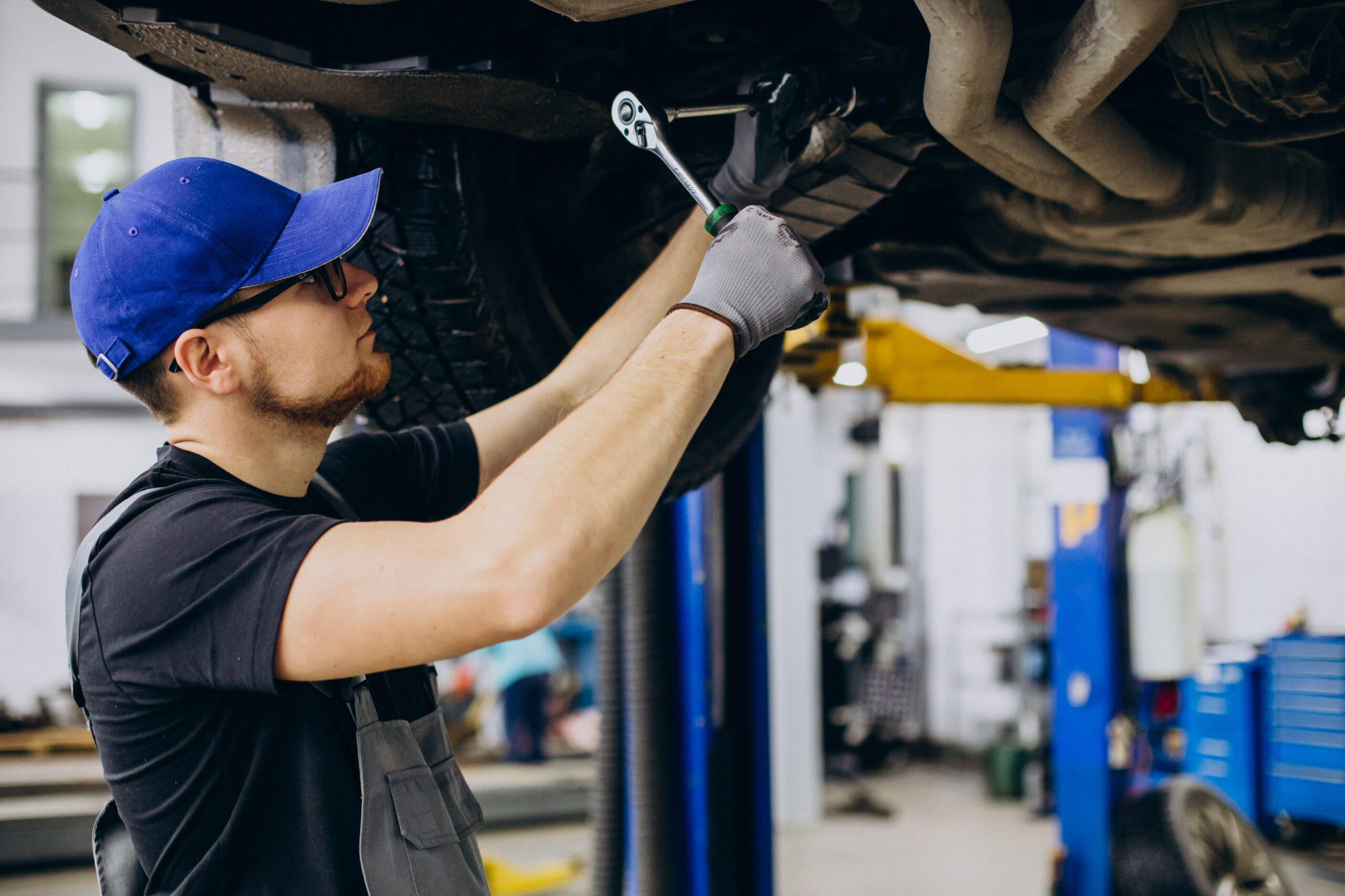
The suspension system of a car is a sophisticated array of parts linking the wheels to the body of the car. It’s essential for:
- Safety
- Road-holding
- Passenger comfort
- Serving as the buffer between the road and the body of the car.
A suspension prevents unnecessary jerking and bumps when a car drives over potholes. Without a good suspension, bumps and potholes would make the ride rough, uncomfortable, and even dangerous.
Important Suspension Parts
The mechanism operates by having the wheels go up and down according to road bumps while keeping the body and interior of the carrelatively stable. The main equipment that enables this involves:
- Springs (Coil or Leaf): They are responsible for holding the weight of the car and neutralizing the energy of bumps.
- Shock Absorbers/Struts: They minimize the bouncing of the springs to stabilize the ride in a timely manner. Struts transform the spring and shock absorber into one.
- Linkages: Control arms, tie rods, and steering knuckles that direct the wheels.
- Ball Joints and Bushings: These flexible joints connect the different linkages and enable controlled motion while minimizing friction.
Key Functions of the Suspension System
The suspension system serves a number of important functions in vehicle dynamics and safety:
- Supports Car Weight: It upholds the total weight of the vehicle, passengers, and other additional loads like luggage.
- Absorbs Road Shocks: It reduces the consequences of bumps, potholes, and irregular road surfaces to provide a smooth and bump-free ride.
- Keeps Tire Contact: To maximize and maintain traction, braking, and stability, it keeps the tires firmly fixed on the road surface.
- Controls Vehicle Handling: It adjusts camber and caster angles (wheel alignment) and body roll during cornering.
5 Common Suspension Problems
1. Worn or Leaking Shock Absorbers/Struts
Shock absorbers and struts are probably the most critical components that affect the quality of your ride quality. With regular and intensive use, the internal hydraulic fluid seal can break down, allowing the fluid to seep out. This fluid loss keeps the shock absorber from damping spring oscillations effectively.
Example: Signs of worn shock observers:
- Continuous wild bouncing after driving over a speed bump
- If the front-end plunges dramatically when applying brakes
Fixes:
To solve this issue, you must replace both the front and rear shock absorbers for balanced handling and consistent braking. A worn-out shock can cause extra stress on springs and tires.
2. Broken or Sagging Springs
Springs handle and maintain the weight of the car and its height. With rigorous use throughout many years, perpetual compression and extension make the springs lose their original tension, leading to “sagging.” A coil spring may break by hitting a huge pothole or because of extreme rusting.
Example: If you notice that one corner of your car is sitting lower than the rest, or the car rubs against the ground when riding over slight bumps, it is probably because of a broken or sagging spring. It will emit a clunking sound while you’re driving over rough terrain.
Fixes:
A broken or sagging spring needs to be replaced. A broken spring is extremely unsafe to drive, since it affects stability and may result in tire failure or damage to other parts of your vehicle’s suspension. Once the sagging spring is replaced, the car returns to it’s proper ride height.
3. Worn Ball Joints
The function of the ball joints is to act as a sphere-and-socket joint that connects the control arms to the steering knuckle. They enable the wheel assembly to travel freely up, down, and side-to-side, which is essential for steering and handling. The covering rubber boots become worn and develop holes because they are constantly in motion and in contact with dirt. As a result, dirt and grease seep in, resulting in quick wear.
Example: A frequent symptom is a clear clunking or popping sound from the front suspension on turning or traversing bumps at low speed. You may also find uneven tire wear or looseness in the steering.
Fixes:
Worn ball joints need to be replaced. This is how the replacement works:
- A technician will lift the vehicle to examine the joint for excessive play.
- Then the worn-out joint is removed
- And replaced by pressing in a new one
4. Cracked or Worn-Out Bushings
Bushings are small and usually made of rubber or polyurethane. They act as shock absorbers between the non-moving and moving components of the suspension. They have three main functions:
- To absorb vibration
- Regulate damp movements
- Eliminate noise.
They will slowly wear out with the passage of time, crack, get soft, or dry out.
Example: Failing bushings will produce a range of symptoms like:
- Excessive vibration
- Shaking in the steering wheel
- A feeling of sloppy or wobbly steering
- A creaking or squeaking sound when turning or driving
Fixes:
The bushings that are damaged will need to be taken out and replaced. Although the bushing itself may be cheap, press-out labour for the old bushing and the new one is usually time-consuming. Since bushings play a key role in stability, replacing them with the proper material (rubber or polyurethane) is key in order to provide the desired ride quality.
5. Faulty Tie Rod Ends
Tie rods are a component of the steering system. Tie rod ends join the steering rack to the steering knuckle so that the front wheels can turn left or right. Similar to ball joints, there are internal moving components covered by a boot, and as soon as the boot breaks down, the joint deteriorates rapidly.
Example: A loose or worn-out tie rod end is a serious problem that leads to poor handling. Symptoms are excessive toe wear on the tyres, steering wheel play (the wheel oscillates without the tyres responding immediately), or a constant rattling sound from the front of the motorcar.
Fixes:
A broken tie rod end should be replaced as soon as possible. This is because of the high importance of tie rods in steering alignment; replacing the component always calls for a professional wheel alignment as soon as possible. This ensures the wheels are straight and the steering angle is properly aligned, avoiding tires wearing out rapidly and allowing for safe handling.
Signs Your Suspension Needs Attention
Pay special heed to these symptoms, because they indicate that your suspension system needs a close look by a mechanic right now:
Excessive Bouncing (The “Bounce Test”): The vehicle keeps bouncing up and down five or six times after crossing over a bump.
- Rough or Jarring Ride: Riding over every individual bump and road imperfection clearly.
- Vehicle Leaning or Sagging: Having one corner of the vehicle lower than the rest when sitting on a level surface.
- “Nose Tip” on Braking: The vehicle’s front end drops considerably forward when braking.
- “Body Roll” when Cornering: The vehicle rolls excessively and heavily to one side during cornering, so handling becomes unstable.
- Mysterious Sounds: The repeated occurrence of clunking, squeaking, rattling, or popping sounds, particularly when cornering or driving over bumps.
- Unbalanced Tire Wear: Tires with wear patterns that are irregular, showing a misalignment or a component fault.
Read More:
The Ultimate Guide to Choosing the Right Car Service Centre
The Final Words
The suspension system is the silent partner in your vehicle’s performance, working tirelessly to ensure your safety and comfort. It’s far more than just a luxury feature; it is integral to your car’s ability to maintain road-holding, stability, and effective braking. Ignoring the early warning signs—be it excessive bouncing from worn shocks, unusual noises from failing ball joints, or a visible sag from a broken spring—is not just an inconvenience; it’s a safety hazard.
Driving with a compromised suspension accelerates wear on other expensive components, most notably your tyres, and severely reduces your ability to control the car in an emergency situation. Regular inspection and timely replacement of worn parts, especially those requiring professional wheel alignment afterward, are essential to restoring your vehicle’s stability and ride quality. By paying special heed to the signs and addressing these common issues promptly, you ensure your car remains a reliable, comfortable, and, most importantly, safe mode of transport for years to come. Don’t wait for a breakdown—prioritize your suspension health today by visiting a professional repair center.